Tesco Clubcard is now available for 16 and 17-year-olds, but why stop there?
Tesco Clubcard is now available for 16 and 17-year-olds, but I think the supermarket could go one step further
For years, I've argued that supermarket loyalty cards have stopped being a nice little bonus and have become something much more important. Walk into almost any major supermarket today, and you'll usually find two prices sitting side by side.
One is reserved for loyalty card holders, while the other is the price everyone else pays. In reality, if you don't have a loyalty card, you're often paying what feels like a non-member tax.
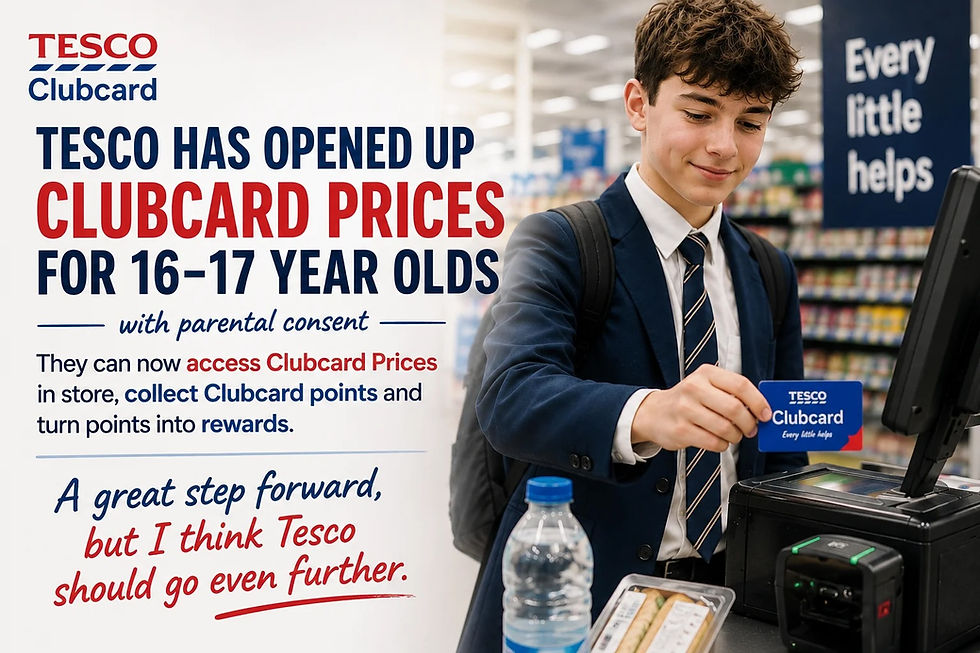
That's why Tesco's latest announcement got me a bit excited, as the supermarket has finally opened up its hugely popular Clubcard scheme to 16- and 17-year-olds, giving younger shoppers access to thousands of Clubcard Prices for the first time. It's a genuinely positive move and one that recognises that many teenagers now buy their own lunches, travel independently, and are beginning to learn to manage their own money.
At the same time, I couldn't help asking myself one simple question. If this is the right thing to do for a 16-year-old, why shouldn't younger teenagers benefit too?
What is changing?
Tesco's new Clubcard for 16 and 17-year-olds allows teenagers in that age group to have their own digital Clubcard. Once they're signed up, they'll be able to access Clubcard Prices in Tesco stores, collect Clubcard points on eligible purchases and convert those points into vouchers to spend on future shopping.
There is one important condition. Rather than signing up themselves, teenagers must first be invited by a parent or guardian who already has a Tesco Clubcard.
The invitation is sent through the Tesco app or website, after which the young person completes the registration and receives their own digital Clubcard.
According to Tesco, more than 24 million UK households already have a Clubcard, and over 80% of purchases in its stores are made by customers scanning their Tesco loyalty card. That alone shows just how important loyalty schemes have become to everyday shoppers.
Why I think this is a really positive move
As someone who spends most days hunting down supermarket bargains and helping people stretch their household budgets, I genuinely welcome this announcement.
Learning how to manage money doesn't suddenly begin on your eighteenth birthday; it's something that's built gradually over many years, and supermarket shopping is actually a brilliant place to start.
Comparing prices, looking for offers, deciding whether something is really worth buying and understanding that small savings soon add up are all valuable life skills.
Many 16 and 17-year-olds already have part-time jobs, buy their own lunches, travel independently and make regular purchases without a parent standing beside them, and giving them access to the same prices as everyone else feels like a sensible recognition of how teenagers actually live today.
The announcement made me think about our foster child
The first person I thought about when I read Tesco's announcement wasn't actually a 16-year-old. It was our 14-year-old foster child.
Like many teenagers, he regularly stops at supermarkets on his way to or from school. Sometimes he's buying a meal deal or a drink, sometimes it's snacks, toiletries or school supplies. Every so often, we'll even ask him to pick something up for us because he's going there anyway, and it saves us a trip out, but it does mean we might end up paying more for it, as he's 14 years old, not 16+
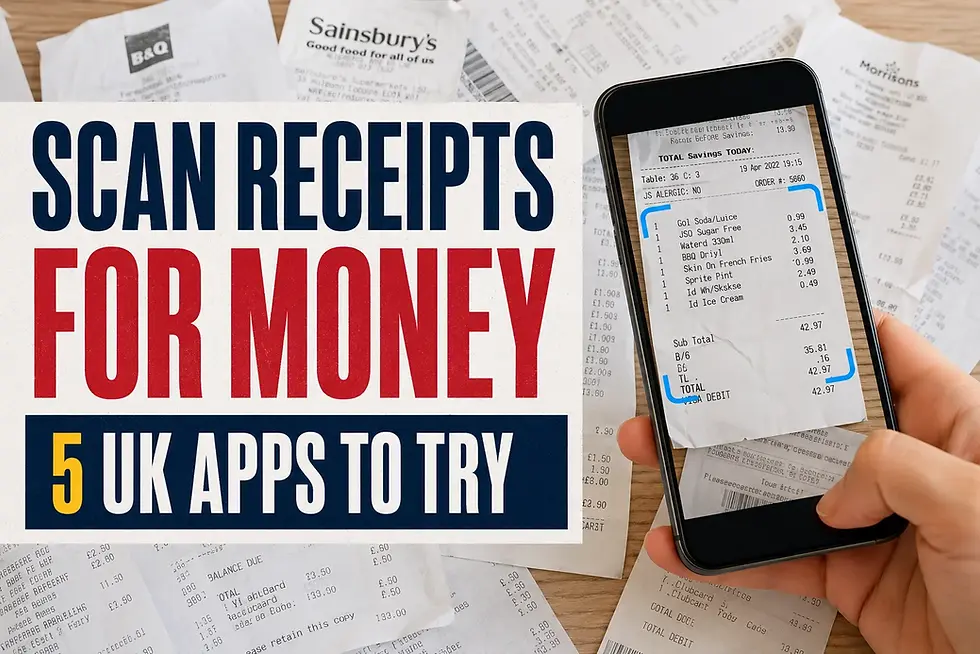
One habit we've got into is that he hands me all of his receipts when he gets home. I scan them into the various receipt-reward apps I use, and it's become a surprisingly good way to teach him about saving money. He can see that even after you've paid for your shopping, there are still ways to squeeze a little extra value from every purchase.
Looking through those receipts, I can see he's often paying more than I would for exactly the same products simply because he doesn't have access to supermarket loyalty prices. He's never complained about it, but it's something I've noticed rather than something he's ever mentioned, but once you see it, it's difficult to ignore, and frankly, it's frustrating!
Why is 16 the magic number?
I completely understand that Tesco has to draw the line somewhere, and there may well be legal or data protection reasons why the supermarket has chosen 16, and if that's the case, then that's a perfectly reasonable explanation.
From a customer's point of view, though, the result is that younger teenagers are paying more for exactly the same products. Our foster child already manages his own spending, has his own bank account and payment card, can shop in-store and online, and makes (mainly) sensible decisions about what he buys, and I know plenty of other 14- and 15-year-olds who do exactly the same.
If a responsible 14-year-old walks into Tesco and buys the same meal deal as a 16-year-old standing behind them in the queue, why should one of them pay more simply because of their age? That doesn't feel particularly fair, especially when loyalty prices have become such an important part of keeping grocery costs down.
If an older person, perhaps someone aged 70 years old or older, wasn't allowed a Clubcard, there would be an uproar, so why is it ok that a younger person can't? It's not a credit card or a banking product; it's purely a way to pay the same price as other people for the same products!?
Loyalty cards aren't really optional anymore
When the Tesco Clubcard launched over 30 years ago, it felt like a nice reward for loyal customers. Collect a few points, receive the occasional voucher and treat yourself every now and then; that's not really how supermarket loyalty schemes work anymore.
Today, they're one of the biggest money-saving tools available. If you regularly shop without a loyalty card, you'll often end up paying noticeably more than someone standing next to you; that's why I often describe it as paying a non-member tax. Nobody is forced to join, but choosing not to can be an expensive decision.
Some people genuinely don't like loyalty schemes because they don't want supermarkets collecting information about what they buy; that's an entirely valid choice, and I completely respect it.
Personally, I'm happy to make that trade. If Tesco, or someone they may sell my data to, knows which cereal I buy or that I occasionally sneak a doughnut into the trolley without my wife noticing, I can live with that if it saves me money every week.
The parental invitation raises another question
One part of the new scheme I'm less convinced by is the requirement that a parent or guardian send the invitation.
For many families, that won't be an issue, but not every young person lives with their parents. Some are in foster care, some live with grandparents or other relatives, and others have more complicated family situations. There will also be parents who simply don't have a Tesco Clubcard themselves.
That means some teenagers who could benefit the most from cheaper shopping may still struggle to access the scheme, so I'd like to see Tesco explore whether there is a safe way for older teenagers to register independently in the future while still protecting younger users.
What about younger teenagers?
Until Tesco decides whether to extend the scheme further, many families will probably continue doing what they've always done.
I know parents who let their children use a screenshot of their loyalty card barcode to use when shopping, and others who have added their digital loyalty cards to a shared phone or wallet where appropriate.
It's a practical way to ensure the whole household benefits from the discounts, although it is against 'the rules' ....
The fact that families are already finding these sorts of workarounds shows just how valuable loyalty pricing has become. People don't want their children paying more than necessary for everyday essentials simply because they aren't old enough to have their own card.
Will other supermarkets follow?
Tesco's announcement could well put pressure on other supermarkets to review their own policies.
Most supermarket loyalty schemes currently require customers to be 18 or over, often due to data protection considerations regarding younger users, but as Tesco has shown, there's a way to introduce younger members while still keeping parents or guardians involved in the process.
Interestingly, Tesco isn't the first supermarket to recognise that younger shoppers can benefit from a loyalty scheme. The Co-op already offers a Junior Membership for under-16s.
A parent or guardian can buy a temporary membership card in-store for £1 and register it by phone. Once that's done, the young person becomes a Junior Member, allowing them to access the scheme's benefits and earn membership points.
That shows there are already ways for supermarkets to include younger customers while still involving a parent or guardian where appropriate. It also makes me wonder whether Tesco's new scheme is just the beginning. If one retailer can successfully offer membership to younger teenagers, perhaps others will now feel confident enough to follow suit.
It'll be interesting to see whether rivals such as Morrisons, Sainsbury's, Asda and Aldi eventually decide to follow suit. If they do, it could mean millions more young shoppers gain access to lower prices on everyday essentials.
Tesco deserves genuine credit for taking this step. Anything that helps young people save money, understand budgeting and build good financial habits is something I welcome, particularly at a time when every pound counts.
I just don't think the conversation should stop at 16. Young teenagers are already making independent purchases, managing their own money and learning important life skills. In many cases, they're buying exactly the same products as older teenagers and adults, yet they're paying more simply because they don't qualify for loyalty pricing.
Perhaps there are legal reasons for that, and if so, I'd love to see those explained. If there aren't, I'd encourage Tesco and the wider supermarket industry to think again. If young people are trusted to travel independently, hold bank accounts, use smartphones, work part-time jobs and, before long, even learn to drive, it doesn't seem unreasonable to suggest they should also be able to buy a sandwich or a bottle of water at the same competitive price as everyone else. I'd love under-18s to be able to use UK cashback apps as well, but I'll pick my battles for now!
Frequently Asked Questions
Can a 16-year-old get a Tesco Clubcard?
Yes. Tesco now allows 16 and 17-year-olds to have their own digital Clubcard, provided they're invited by a parent or guardian through the Tesco app or website.
Can 16 and 17-year-olds get Clubcard Prices?
Yes. Once they've joined the scheme, they can access Clubcard Prices in Tesco stores and collect Clubcard points on eligible purchases.
How do teenagers sign up?
A parent or guardian with a Tesco Clubcard needs to send an invitation through the Tesco app or website. The teenager then follows the sign-up process to receive their own digital Clubcard.
Why can't younger teenagers have a Tesco Clubcard?
Tesco hasn't publicly explained why the minimum age is 16. It's possible that legal or data protection considerations have influenced the decision, although the supermarket hasn't confirmed this.
Can children use a parent's Tesco Clubcard?
Some families choose to let older children use a parent's Clubcard when shopping, but it's always worth checking Tesco's latest Clubcard terms and conditions to make sure you're using the scheme in line with its rules.