Hobbies that hold their value: where your money actually goes further
Updated: Aug 17
This article has been published as part of an advertising collaboration.
Hobbies that hold their value: where your money actually goes further
Look through a month of spending and there will probably be purchases that disappeared almost as soon as the money left your account. A takeaway is eaten, a coffee is finished and another month of a streaming subscription passes whether you used it much or not.
There is nothing inherently wrong with spending money on things you enjoy, but it can be useful to ask what you actually received for that money.
One way to look at leisure spending is through cost per use. Rather than judging a hobby by its initial price alone, divide that cost by the amount of time you are likely to spend enjoying it. Something costing £100 may initially look expensive, but if you use it across 50 evenings, the cost works out at £2 per evening, thats cost per use logic for you.
Why Does Cost Per Use Matter When Choosing a Hobby?
Many forms of entertainment are temporary by design. You pay for a meal, cinema ticket or evening out because you want the experience, and there is no expectation that you will have something physical left afterwards. Those purchases can still be worth every penny when they are things you genuinely value.
Recurring spending can be harder to judge because each individual payment may look relatively small.
A few pounds for one subscription and another few pounds for something else can become a much larger annual expense, particularly when some services are barely being used. Reviewing those payments occasionally gives you the chance to decide whether they still deserve space in your budget.
Cost per use gives you a different way to judge the alternatives. If a £60 purchase provides 30 evenings of entertainment, that is £2 per use, while a £10 monthly subscription used only once that month has effectively cost £10 for that occasion. The calculation doesn't tell you which option you should choose, but it does make the comparison easier to see.
Which Hobbies Can Give You Long-Term Value?
Some hobbies require very little ongoing spending once you have the basics. Second-hand books can provide weeks of reading, art materials may last across several projects, and an instrument already sitting in the house can be picked up again without taking on another monthly cost. Gardening can work in a similar way, with a relatively small purchase of seeds or basic tools creating something to do over a much longer period.
The important factor is whether you will actually use what you buy. Spending £200 on equipment for a hobby you abandon after a fortnight isn't automatically better value than paying £10 a month for something you use every evening. Cost per use works best when it is based on realistic behaviour rather than what you hope you might do.
Second-hand equipment can also lower the initial cost when you are trying something new. Books, instruments, craft equipment and hobby tools often appear on local selling platforms and charity-shop shelves, giving you a chance to experiment without committing as much money at the beginning.
Can Model Building Be Good Value for Money?
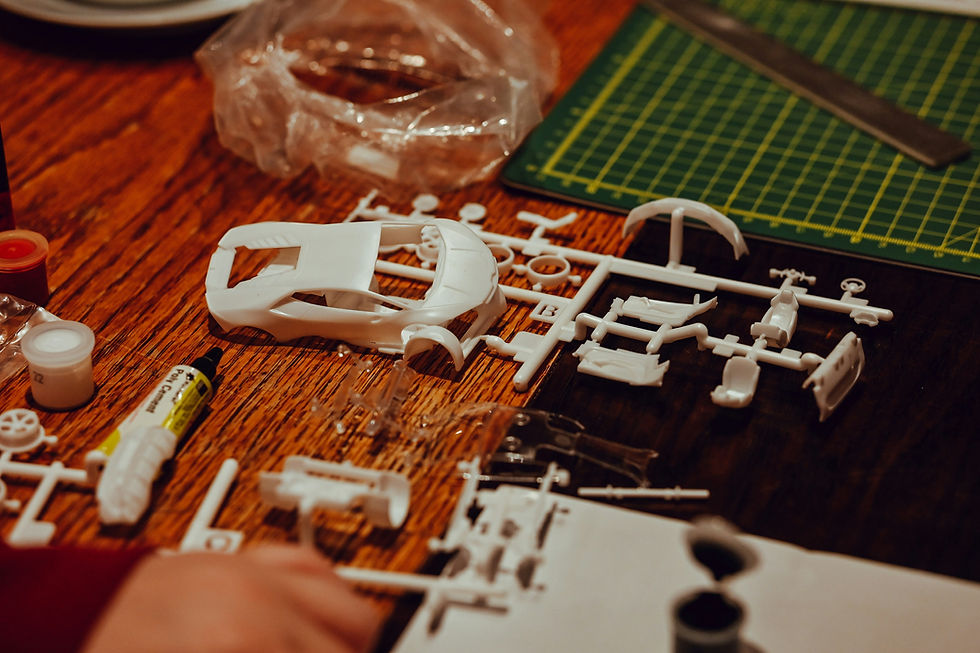
Model building is an example of a hobby where much of the value comes from the time spent completing the project rather than simply owning the finished item. Detailed kits containing hundreds or thousands of pieces can take many evenings to complete, spreading the original purchase cost across a relatively long period of entertainment.
Some enthusiasts choose LEGO-compatible model car kits that are built gradually and then kept as display pieces once finished. Larger projects can include detailed interiors, working doors and mechanical features, while smaller builds may be completed in less time and take up less space when displayed.
That doesn't automatically make model building a cheap hobby. Larger kits can involve a significant initial spend, so the useful calculation is how much enjoyment somebody expects to get from completing the build rather than whether the box itself looks inexpensive.
Why Can a One-Off Purchase Beat a Monthly Subscription?
A one-off purchase stops costing money once it has been paid for. If you continue using it, every additional hour or evening effectively reduces its cost per use, which is why some hobbies can become better value the longer you stick with them.
Subscriptions work differently because the charge continues for as long as the membership remains active. That can still represent excellent value when the service is used regularly, but the calculation becomes less attractive when months pass with little or no use.
This is why cancelling a subscription isn't automatically a saving if you replace it with something more expensive that you never touch. The aim is to move leisure spending towards things you actually use rather than simply replacing one type of unnecessary purchase with another.
Should You Cancel Subscriptions to Pay for a Hobby?
Start by checking which subscriptions and recurring payments are currently leaving your account. Look at recent bank and credit-card statements rather than relying on memory, as forgotten free trials and services you stopped using can otherwise remain unnoticed.
For each one, ask how often you used it during the previous month and whether you would notice if it disappeared tomorrow. Services that are still used regularly may deserve to stay, while subscriptions that have been untouched for several months are obvious candidates for cancellation.
You can then decide what happens to the money you free up. It might go into savings, towards paying down debt or into a separate leisure budget for books, craft supplies, gardening, model building or another hobby that provides more value to you.
Can Hobbies Hold Their Financial Value?
"Holding value" doesn't necessarily mean that something will be worth the same amount when you sell it. Most hobbies should be bought because you want to use and enjoy them, not because you expect to make a profit later.
Some items do have a second-hand market, particularly collectables, specialist equipment and well-maintained hobby gear. Resale value can therefore be a useful bonus when comparing purchases, but it shouldn't be assumed before buying.
The more reliable measure is the value you personally receive while owning something. If a hobby fills dozens of evenings, helps you learn a skill or gives you a finished project you want to keep, that benefit exists regardless of what somebody might eventually pay for it.
How Can You Work Out Whether a Hobby Is Worth the Money?
Start with the full cost rather than the headline purchase price. Include any tools, consumables, memberships or accessories you will realistically need, then estimate how often you expect to use them over the next year.
You can then divide that amount by the number of sessions or hours you expect to spend on the hobby. A £120 purchase used across 60 evenings costs £2 per evening, while the same purchase used twice costs £60 each time.
That calculation doesn't measure enjoyment, which is ultimately the most important part of leisure spending. It simply gives you a clearer picture of what your money is buying and makes it easier to compare several options before committing.
Spend Your Leisure Budget on What You Actually Use
The best-value hobby isn't automatically the cheapest one. A £10 purchase left untouched in a cupboard is worse value than a £100 purchase that gives you months of enjoyment, so price needs to be considered alongside how much use you expect to get from it.
The same principle applies to subscriptions, days out and other entertainment. Review what you are already paying for, keep the things that genuinely add something to your life and question the spending that has become automatic.
If cancelling a forgotten subscription frees up £10 or £20 a month, you don't necessarily have to stop spending that money altogether. Putting it towards something you will use repeatedly can be a more money-savvy way of getting something tangible from the same part of your budget.
Frequently Asked Question
What is cost per use?
Cost per use is the purchase price divided by the number of times you use something. It can help you compare an expensive item used frequently with a cheaper purchase or subscription that receives very little use.
Are hobbies a waste of money?
No, provided the spending fits comfortably within your budget and you value the time or enjoyment the hobby provides. The useful question is whether you are getting enough value from what you spend rather than whether hobbies should cost anything at all.
What hobbies have low ongoing costs?
Reading second-hand books, drawing, painting, gardening and playing an instrument you already own can all have relatively low ongoing costs. Model building can also spread a one-off purchase across many hours, although larger kits may have a higher initial price.
Is it better to buy something than pay for a subscription?
Not necessarily. A regularly used subscription may offer much better value than an item you buy and never use, so compare how often you realistically use each option rather than judging them solely by how they are paid for.
Should resale value matter when choosing a hobby?
It can be useful to consider, but it shouldn't be the main reason for buying something. Resale prices can change, while the enjoyment and use you get from a hobby are benefits you receive while you own it.